Why we gave our agents their own computer
Wazza OS, the seven points behind it, and what it can't do yet.
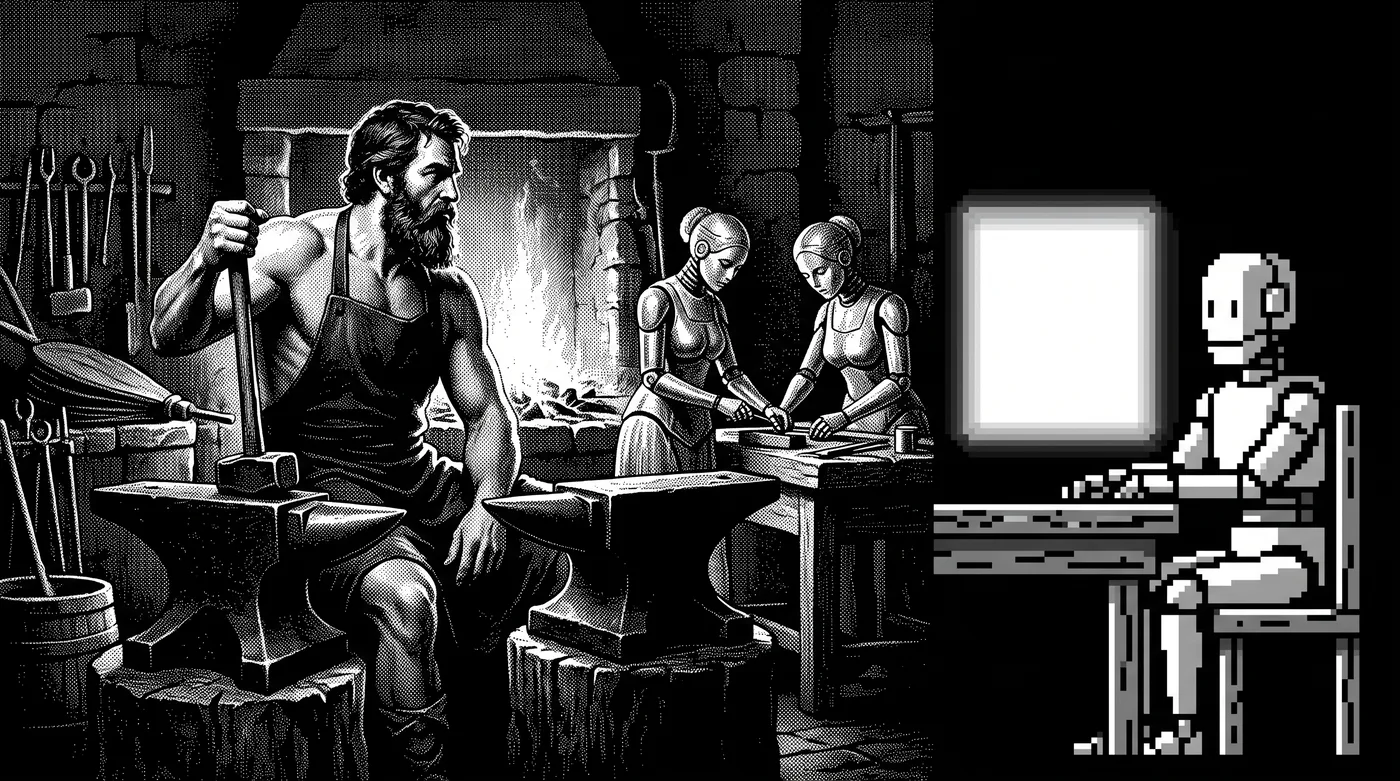
Most work doesn't end in a chat window. It ends in Blender, a browser, a spreadsheet, a game engine, and an agent that can't open those hands the job back to you right at the last step (the annoying one). That's why we built Wazza OS: a computer for your agents, where each app runs in its own tab with a chat beside it, and you pick the agent and the model.
The line on the site says it better than a paragraph: give your agents a computer, keep yours.
Why not just let them use mine
Because I'm using it. Computer-use demos look cool until the agent moves your cursor in the middle of a call. In Wazza OS each agent gets its own screen/mouse/keyboard, nothing it does touches your machine, and your own computer is only used after you click to allow it. You direct and sign off, the agents do the work, and an agent that isn't sure checks with you instead of clicking again.
People ask me what a desktop can do that a web app can't. Short answer: 1. air-gapped setups for IP-sensitive projects, 2. a shared runtime where agents and humans work in the same desktop apps with one context. For the agents themselves the interface stays boring on purpose (MCP where the app has it, computer vision where it doesn't).
Bring your own everything
You plug in the agent you already use (Claude Code, Codex, Hermes and others), your model plan or API keys, and your apps. No lock-in to one lab, your logins stay yours and the providers bill you directly. Agents run all day, so tokens shouldn't feel like rent: run a model on your own machine and those chats cost no credits and never leave it.
What an agent learns goes into skills as plain files, next to the turns they came from, so you can read them, edit them or undo them. If an agent picked up a bad habit you want to find it in a file, not guess it from behaviour.
What it isn't (yet)
It's an alpha and it's Linux only for now, Windows/macOS and cloud VMs come next. It's not autonomous either: agents get stuck and you'll step in, and not every app is fast. I'd rather say that upfront than have you find out in the first ten minutes.
Why I care
Datacenters take years to build and most people already own a decent computer, so it runs on your machine now and on a bigger one later when a job needs it. And honestly it's the setup I wanted for myself: agents working 24/7 in real apps while I keep the part that matters (more on that in this note).
The manifesto is seven short points, about four minutes: os.wazza.ai/#manifesto. If you're on Linux you can register for the alpha on the same page.
New notes by email. No spam.
That didn't go through. Check the fields and try again, or message me on LinkedIn.
By subscribing you agree that Brevo stores your email to send you new notes. You confirm once by email, and every email has an unsubscribe link. Privacy note